
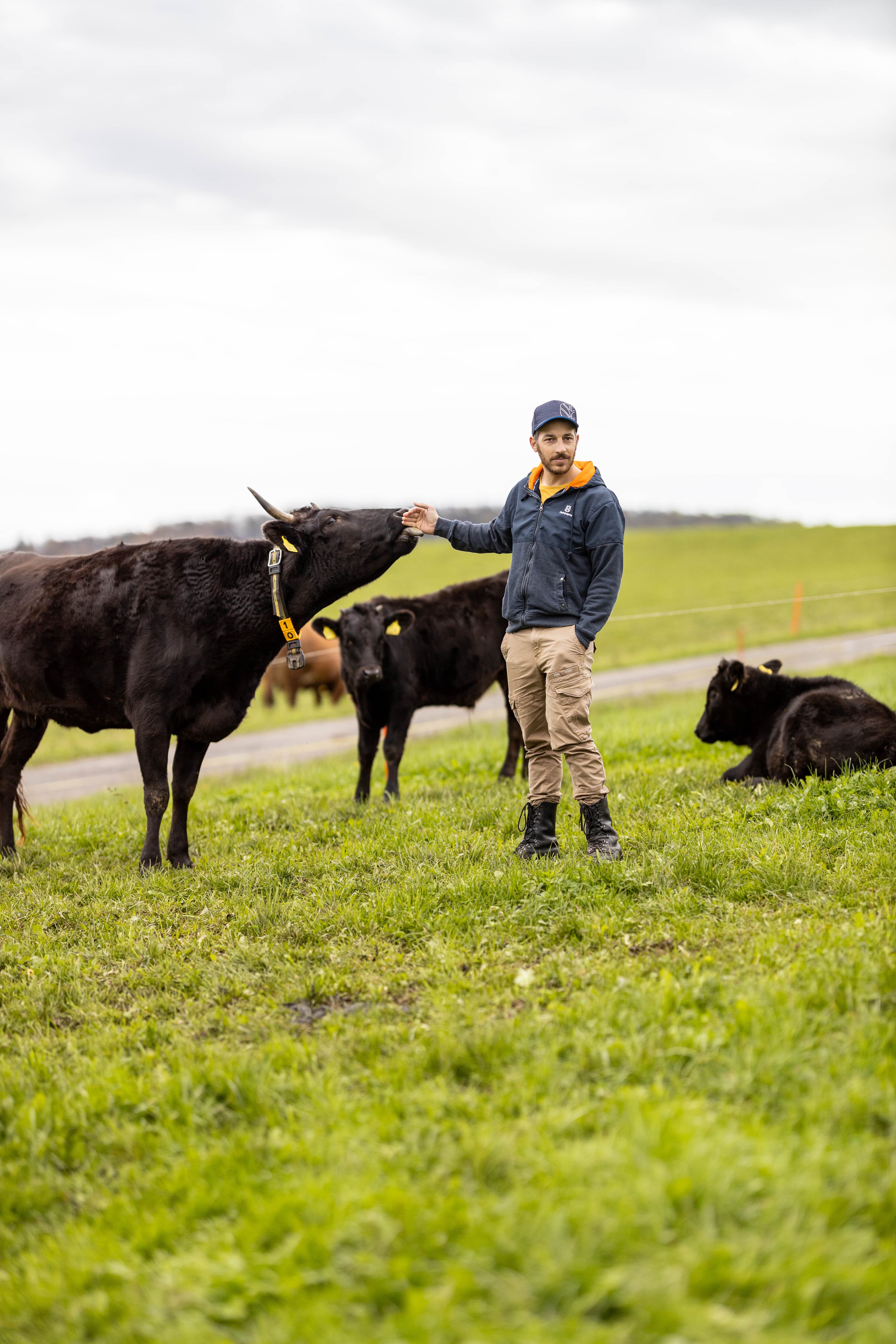
The most important points at a glance
Wagyu is the breed, Kobe is a strictly defined origin and quality designation from Japan for beef from Tajima Wagyu in Hyogo Prefecture. Not every Wagyu is Kobe, but every Kobe is Wagyu. When buying in Switzerland you should therefore always pay attention to origin, certificate and clear labeling, not only the name on the packaging.
For customers in Switzerland, the most common misconception is not the price but the designation. What is often sold as premium beef is not automatically Kobe, and not every beef from Wagyu cattle meets the strict Kobe criteria. This is where marketing diverges from traceable origin.
What is the difference between Wagyu and Kobe beef?
Wagyu initially describes a Japanese cattle breed. Kobe, by contrast, is a protected designation of origin for meat from a clearly defined region and from precisely defined Wagyu lines. Those who equate both terms miss the crucial point: Kobe is a sub-group of Wagyu, but with much stricter rules.
| Characteristic | Wagyu | Kobe Beef |
|---|---|---|
| Meaning | Breed | Origin and quality designation |
| Origin | Japan, varying by line and farm | Hyogo Prefecture in Japan |
| Scope | Broad category | Very narrowly defined subset |
| Purchasing relevance | Gives indications of marbling and raising conditions | Requires additional origin and authenticity verification |
How to recognize good Wagyu beef when buying?
- Clear origin information, ideally with traceable line and producer
- Unambiguous declaration whether it is Wagyu or Kobe
- Certificate or verified documentation instead of just flowery product descriptions
- Transparent details about cut, maturation and shipping
- A retailer who can answer questions about fat content, marbling and preparation
From our experience at Wagyu Glück Erdin we repeatedly see: the best guidance is not the prettiest label, but the cleanest declaration. If origin, cut and certificate match, the purchase becomes much easier. We sell Wagyu beef directly from the farm and through our online shop, so traceability is central to our everyday work.
What you should not rely on
A high price alone does not prove Kobe or exceptional quality. Also terms like “Premium”, “Deluxe” or “Special Cut” say little without proof of origin. What matters is whether the retailer can substantiate the designation professionally.
Why does Kobe often seem more exclusive than Wagyu?
Kobe seems more exclusive because the designation is more strictly controlled and less available. Many expect the name alone to explain quality; in fact it primarily conveys origin and regulation. This is important for you as a buyer, because a rare name does not automatically fit your occasion, budget or desired taste.
We often see customers ask for the name first and then for the origin. For purchasing, it makes more sense to do the opposite.
What questions should you ask before buying?
When buying Wagyu in Switzerland, three short questions often help more than any advertising slogan: Where does the meat come from, how is it documented, and what is the cut suitable for? This helps you avoid choosing a product by name rather than by actual suitability. First-time buyers should also ask about preparation instructions, as fat structure and cooking behavior differ significantly from classic beef.
Frequently asked questions
Can you simply buy Kobe beef in Switzerland?
Is more fat in Wagyu automatically better?
How can I tell if an online shop is reputable?
Is Wagyu from Switzerland the same as Japanese Wagyu?
For us at Wagyu Glück Erdin, this exact distinction is the core of the purchase: not the loudest name, but the cleanest origin convinces. If you choose Wagyu consciously, you make the better decision regarding taste, price and occasion. If you want to compare products directly, you can find a direct entry in the Wagyu Glück Erdin online shop: https://shop.wagyuglueck.ch
Wagyu direkt vom Hof entdecken
Wagyu Glück Erdin, Gansingen